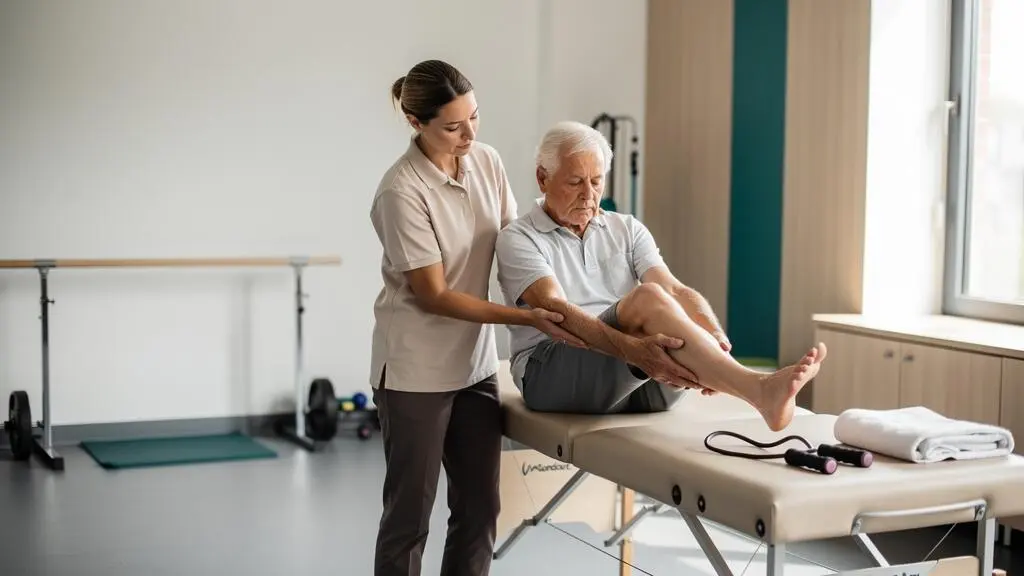
After knee surgery for osteoarthritis — whether a total knee replacement or an osteotomy — your recovery journey doesn’t end when you leave the hospital. The weeks and months that follow are crucial for regaining mobility, reducing pain, and returning to the activities you enjoy. Many patients wonder what they can safely do at home between physical therapy sessions, how to tell if their pain is normal, and which warning signs require immediate medical attention.
This article provides practical, evidence-based guidance to help you navigate your post-operative recovery with confidence. You’ll learn why early, supervised movement supports healing, how to manage discomfort safely, which types of exercises generally support recovery, and when to contact your surgical team without delay. Every piece of advice is grounded in the understanding that your specific protocol depends on your type of surgery and must be validated by your care team.
What Happens During Post-Surgery Rehabilitation for Knee Osteoarthritis?
Post-surgery rehabilitation after knee osteoarthritis surgery aims to restore range of motion, rebuild strength, reduce pain and swelling, and help you return safely to daily activities. Whether you’ve had a total knee replacement (also called knee arthroplasty) or an osteotomy, the rehabilitation process typically combines supervised physical therapy sessions with exercises and activities you perform at home.
One common misconception is that you should keep your knee completely immobilized after surgery to protect the surgical site. In reality, early mobilization — supervised and progressive — generally supports better outcomes. According to the guideline of the American Physical Therapy Association on total knee arthroplasty, physical therapists should develop an early mobility plan for patients who have undergone knee replacement surgery. This approach helps prevent stiffness, maintains muscle function, and supports circulation.
A typical rehabilitation timeline unfolds in phases. Initially, you focus on gentle range-of-motion exercises, managing swelling, and beginning to bear weight as directed by your surgeon. As healing progresses, you gradually increase strengthening exercises and walking distance. Eventually, you work toward returning to more demanding activities. The pace and specific milestones vary significantly depending on the type of surgery you had, your overall health, and how your body responds to treatment.
Important to remember: Every recovery is unique. Comparing your progress to someone else’s timeline can lead to unnecessary worry or, conversely, pushing too hard too soon. Your surgical team and physical therapist will adjust your protocol based on your individual healing and goals.
How to Manage Pain and Swelling While Recovering
Pain and swelling are normal parts of the healing process after knee surgery, but managing them effectively makes rehabilitation more comfortable and helps you stay consistent with your exercises. The key is balancing rest with appropriate movement, using safe methods to reduce inflammation, and knowing when discomfort signals a problem.
For pain management, follow the medication plan prescribed by your surgical team exactly as directed. Never adjust dosages or stop medications on your own, and discuss any concerns about pain control at your follow-up appointments. Between doses, positioning your leg properly — typically elevated with support under the calf, not directly under the knee — can reduce throbbing and discomfort.
To reduce swelling, a combination of approaches works best. The APTA guideline recommends that physical therapists teach and encourage cryotherapy (ice application) for early post-operative pain management after total knee replacement. When applying ice at home, place a thin cloth between the ice pack and your skin, and limit sessions to about 15 to 20 minutes at a time, several times throughout the day, especially after activity or exercise.
Elevation also plays an important role. When resting, prop your leg so that your knee is at or above the level of your heart. This position helps fluid drain away from the surgical site. However, complete rest isn’t the goal — gentle movement, as prescribed by your care team, actually helps reduce swelling by promoting circulation and preventing stiffness.
Safe pain and swelling management at home
- Take prescribed pain medication exactly as directed by your surgeon
- Apply ice for 15-20 minutes several times daily, with a cloth barrier
- Elevate your leg when resting, supporting the calf rather than the knee
- Perform gentle movement as instructed to promote circulation
- Contact your care team if pain suddenly worsens or doesn’t gradually improve
It’s normal for pain to improve gradually over weeks. However, if you experience a sudden increase in pain, pain that becomes severe despite medication, or pain accompanied by other symptoms like fever or redness, contact your surgical team promptly. These could indicate complications that require attention.
Which Exercises Support a Faster and Safer Recovery?
The exercises that support your recovery generally fall into three categories: range-of-motion exercises to restore flexibility, strengthening exercises to rebuild muscle support around the knee, and progressive walking or gait training to regain functional mobility. Each category serves a specific purpose in your rehabilitation, and your physical therapist will prescribe a personalized sequence based on your surgery type and healing progress.
Early range-of-motion exercises often begin within the first days after surgery. These might include gentle ankle pumps, assisted knee bends (sliding your heel toward your buttocks while lying down), and straightening exercises. The goal is to prevent scar tissue from limiting your knee’s movement. Your physical therapist will show you exactly how far to move and how many repetitions are safe for your situation.
Strengthening exercises typically start gently and progress over time. Common examples include quad sets (tightening the thigh muscle while keeping the leg straight), straight-leg raises, and eventually resisted exercises with bands or light weights. Building strength in the quadriceps, hamstrings, and hip muscles provides crucial support for your knee joint and helps you walk more normally.
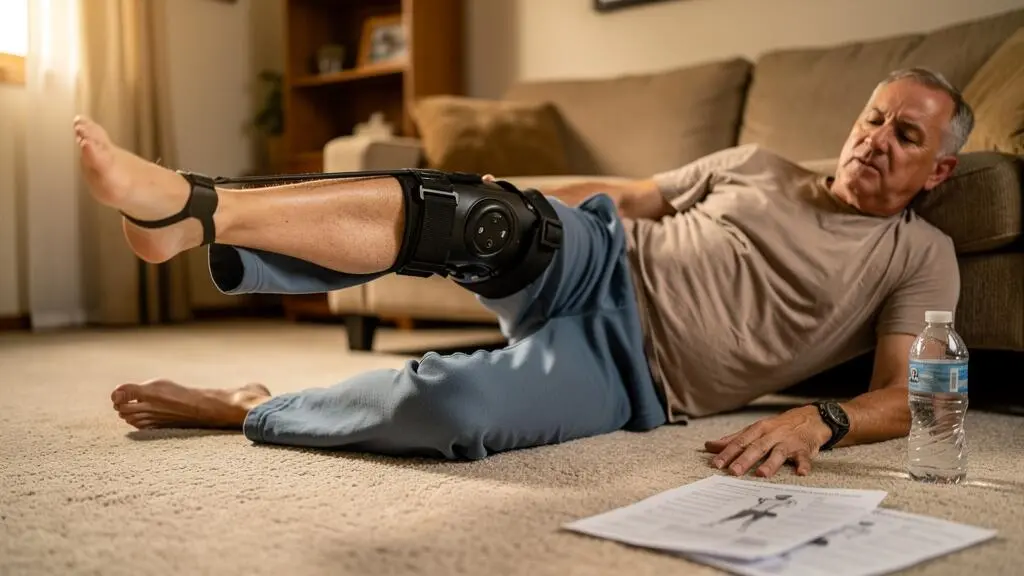
Progressive walking begins with short distances using assistive devices as recommended — often a walker initially, then crutches or a cane — and gradually increases as your strength and stability improve. According to the recommendations of the AAOS on recovery, a progressive walking program is encouraged, starting at home and eventually extending outdoors.
The specific exercises prescribed for you depend heavily on the type of surgery performed. A total knee replacement protocol differs from an osteotomy protocol, and even among knee replacements, techniques and implants vary. This is why choosing a specialized, experienced surgeon makes such a difference — not only for the surgery itself but for the personalized post-operative guidance that follows. Surgeons with extensive expertise in knee procedures, such as Pr. Etienne Cavaignac, who performs a high volume of knee interventions annually, can provide tailored rehabilitation protocols based on the specific surgical approach used in your case.
Critical safety reminder: Never perform exercises beyond what your care team has explicitly approved. An exercise that’s safe for one type of knee surgery or at one stage of healing might be inappropriate for another. Always verify new exercises with your physical therapist or surgeon before attempting them.
Progressing step by step means listening to your body while following professional guidance. Some discomfort during exercises is expected — your muscles are working in new ways — but sharp pain, significant swelling immediately after exercise, or pain that persists for hours may signal that you’re doing too much. Report these signs to your physical therapist so they can adjust your program accordingly.
What Warning Signs Should You Never Ignore After Knee Surgery?
Knowing the difference between normal post-operative discomfort and symptoms that require immediate medical attention is essential for your safety. While some pain, swelling, and stiffness are expected parts of recovery, certain warning signs indicate potential complications that need urgent evaluation.
Contact your surgical team or seek emergency care immediately if you experience any of the following symptoms:
- Sudden, severe pain that doesn’t respond to your prescribed medication or is markedly worse than before
- Fever above 100.4°F (38°C) or chills, which may indicate infection
- Increasing redness, warmth, or swelling around your surgical incision, especially if accompanied by drainage or foul odor
- Calf pain, swelling, or tenderness, particularly in one leg more than the other, which could signal a blood clot
- Chest pain or shortness of breath, which requires immediate emergency attention as it may indicate a pulmonary embolism
- Persistent numbness or tingling that worsens rather than improves
According to the CDC recommendations on healthcare-associated blood clots, you should alert your healthcare provider as soon as possible if you notice signs or symptoms of deep vein thrombosis. Knee surgery is a known risk factor for blood clots, and your surgical team will likely prescribe preventive measures such as blood thinners, compression stockings, or specific movement protocols during your initial recovery weeks.
The AAOS notes that serious complications such as knee joint infection occur in fewer than 2% of patients after total knee replacement. While this rate is low, infections do happen and require prompt treatment. Early signs might include increasing pain days or weeks after surgery, warmth and redness at the incision site, or fever.
- Immediately (call emergency services):
Chest pain, severe shortness of breath, or symptoms of stroke.
- Same day (call your surgeon’s office):
Fever, sudden increase in pain, significant new swelling, redness spreading around your incision, or calf pain suggesting possible blood clot.
- At next appointment or via message:
Gradual pain that isn’t improving as expected, concerns about medication side effects, or questions about exercise progression.
- Normal post-operative experiences:
Moderate swelling that improves with elevation and ice, muscle soreness after physical therapy, stiffness in the morning that loosens with gentle movement, gradual improvement in pain over days and weeks.
When in doubt, it’s always better to contact your care team. They would rather reassure you about a normal symptom than have you wait to report something serious. Keep their contact information readily available, and don’t hesitate to use it if something feels wrong.
Practical Tips to Stay Motivated and Recover with Confidence
Recovery from knee surgery is a marathon, not a sprint. The process takes weeks to months, and staying motivated throughout requires realistic expectations, a sustainable routine, and strategies to manage both physical fatigue and the emotional challenges that often accompany prolonged recovery.
Building a realistic weekly routine helps you balance activity with adequate rest. A typical week might include three to five physical therapy sessions (in-clinic or home-health visits, depending on your stage of recovery), daily home exercises as prescribed, short progressive walks, and scheduled rest periods. Writing down your routine and checking off completed exercises can provide a sense of accomplishment and help you track your progress.
Managing fatigue is crucial. Your body is healing from major surgery, and that requires significant energy. It’s normal to feel more tired than usual, especially in the first weeks. Plan your most demanding activities for times of day when you typically feel strongest, and don’t hesitate to rest when needed. Quality sleep supports healing, so discuss any sleep difficulties with your care team — adjusting pain medication timing or using positioning aids might help.
Keeping morale up during convalescence can be challenging, particularly if you’re normally very active. Setting small, achievable goals — walking to the kitchen window, bending your knee five degrees more than last week, reducing pain medication by one pill — provides frequent wins that sustain motivation. Connecting with others who’ve been through similar surgery, whether through support groups or online communities, can also be encouraging, though remember that everyone’s recovery timeline differs.

Realistic expectations about the recovery timeline help prevent discouragement. Most people see significant improvement in the first six to twelve weeks, but full recovery and maximum improvement can take six months to a year. The AAOS notes that most people can resume driving approximately four to six weeks after knee replacement surgery, once they’ve regained adequate control and are no longer taking narcotic pain medications. These timeframes are guidelines, not guarantees — your personal timeline depends on multiple factors including your overall health, the specific surgery performed, and how consistently you follow your rehabilitation program.
As your knee heals and your activity level increases, you might also be interested in natural approaches to support long-term joint health as part of your overall wellness strategy. Similarly, if you’re transitioning from using assistive devices like walking boots as part of your recovery, understanding what to expect can ease the process.
Once you’ve successfully completed your knee surgery rehabilitation, the lessons you’ve learned about gradual progression and listening to your body remain valuable. If you experience discomfort when returning to full weight-bearing after using protective devices, knowing how to recognize normal adjustment versus concerning symptoms continues to be important. Managing pain after removing walking boots or other orthopedic supports follows similar principles of distinguishing expected discomfort from warning signs.
Remember throughout your recovery: You are not in this alone. Your surgical team, physical therapist, family, and support network are all resources. Recovery requires active participation on your part, but it should never feel like a solitary struggle. Reach out when you need guidance, reassurance, or adjustment to your plan.
By following your prescribed rehabilitation protocol, moving early and progressively under professional guidance, managing pain and swelling safely, recognizing warning signs, and maintaining realistic expectations, you give yourself the best chance for a successful recovery. The effort you invest now in your rehabilitation pays dividends in restored mobility, reduced pain, and a return to the activities that matter most to you.
How much pain is normal after knee osteoarthritis surgery?
Moderate pain and discomfort are normal in the first days and weeks after knee surgery. The pain should gradually decrease over time with proper pain management. However, sudden severe pain, pain that worsens rather than improves, or pain accompanied by fever or redness requires immediate contact with your surgical team, as these may indicate complications.
When can I start doing exercises at home after knee surgery?
You’ll typically begin gentle exercises within the first few days after surgery, as directed by your surgeon and physical therapist. These early exercises focus on preventing stiffness and maintaining circulation. Your care team will provide specific instructions on which exercises to perform at home, how many repetitions, and when to progress. Never attempt exercises that haven’t been explicitly approved by your rehabilitation team.
How long does it take to walk normally again after knee replacement?
The timeline for returning to normal walking varies significantly among individuals. Most people progress from using a walker to a cane to walking unassisted over the course of several weeks to months. Significant improvement typically occurs within the first six to twelve weeks, but achieving your maximum improvement may take six months to a year. Your specific timeline depends on your overall health, the type of surgery performed, and your adherence to physical therapy.
What are the signs of infection after knee surgery?
Signs of infection include fever above 100.4°F, increasing redness or warmth around the surgical incision, swelling that worsens rather than improves, drainage from the incision (especially if discolored or foul-smelling), and increasing pain despite medication. If you notice any of these symptoms, contact your surgeon’s office the same day. While serious infections occur in fewer than 2% of knee replacement patients, prompt treatment is essential if infection does develop.
Can I do too much physical therapy and damage my knee?
Yes, it’s possible to overdo exercises, which is why following your prescribed protocol is crucial. While early mobilization is beneficial, excessive or improper exercise can cause increased swelling, pain, or potentially compromise your surgical outcome. Signs you may be doing too much include sharp pain during exercises, significant swelling immediately after activity, or pain that persists for many hours. If you experience these symptoms, reduce your activity level and consult your physical therapist to adjust your program.
Medical Disclaimer: This article provides general educational information about post-surgery rehabilitation for knee osteoarthritis. It is not intended to replace professional medical advice, diagnosis, or treatment. Every patient’s situation is unique, and rehabilitation protocols must be personalized by your surgical team based on your specific surgery type, overall health, and recovery progress. Always consult your surgeon, physical therapist, or other qualified healthcare provider with questions about your condition or treatment plan. If you experience any warning signs or symptoms of complications, seek medical attention immediately.