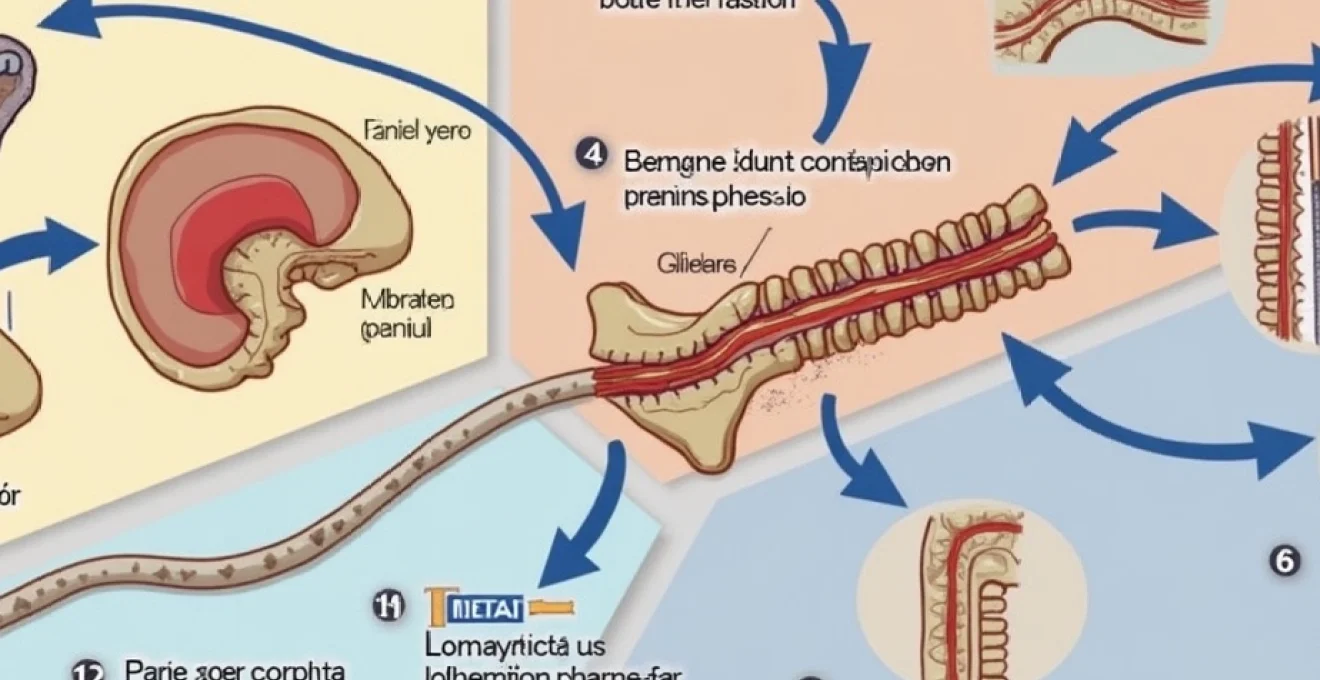
C6-C7 foraminal narrowing represents one of the most clinically significant forms of cervical spinal stenosis, affecting the neural pathways between the sixth and seventh cervical vertebrae. This condition occurs when the intervertebral foramina—the bony openings through which spinal nerves exit the spine—become progressively constricted, leading to compression of the C7 nerve root. The C6-C7 level is particularly susceptible to degenerative changes due to its position as the most mobile segment of the lower cervical spine, bearing substantial mechanical stress during daily activities.
The clinical implications of C6-C7 foraminal stenosis extend far beyond localised neck discomfort, potentially causing radicular symptoms that affect the entire upper extremity. When nerve compression occurs at this level, patients may experience shooting pain, numbness, and weakness radiating from the neck through the shoulder, arm, and into specific fingers. Understanding the complex anatomical relationships and pathophysiological mechanisms underlying this condition is essential for healthcare professionals managing patients with cervical radiculopathy.
Anatomical structure of C6-C7 neural foramina and adjacent vertebral components
The C6-C7 neural foramen represents a complex three-dimensional space bounded by multiple anatomical structures that collectively determine its patency. The foramen is delineated anteriorly by the posterior aspect of the C6 vertebral body and the C6-C7 intervertebral disc, superiorly and inferiorly by the pedicles of C6 and C7 respectively, and posteriorly by the facet joint complex. This intricate arrangement creates a dynamic space that changes dimensions with cervical spine movement, particularly during extension and lateral flexion manoeuvres.
The C7 nerve root, which traverses this foraminal space, carries motor innervation to the triceps muscle, wrist flexors, and finger extensors, whilst providing sensory coverage to the middle finger and portions of the index and ring fingers. The nerve root is accompanied by venous plexuses and small arteries that contribute to the overall space occupation within the foramen. Any reduction in foraminal dimensions can compromise not only the nerve root itself but also its vascular supply, potentially leading to ischaemic radiculopathy.
Uncovertebral joint morphology and its impact on foraminal dimensions
The uncovertebral joints, also known as Luschka joints, represent unique anatomical features of the cervical spine that significantly influence foraminal morphology. These pseudo-articulations develop between the uncinate processes of the lower vertebra and the bevelled edges of the upper vertebral body. At the C6-C7 level, these joints undergo progressive degenerative changes with advancing age, leading to osteophyte formation that can substantially reduce foraminal dimensions.
Research indicates that uncovertebral joint degeneration occurs in approximately 85% of individuals over age 50, with the C6-C7 level being one of the most commonly affected segments. The resulting bone spurs frequently project posterolaterally into the neural foramen, creating a pincer-like effect that compresses the exiting nerve root. This phenomenon is particularly problematic because the osteophytes can grow to significant sizes whilst remaining asymptomatic until critical foraminal narrowing occurs.
Facet joint orientation and degenerative changes at C6-C7 level
The facet joints at the C6-C7 level demonstrate a unique orientation that predisposes them to specific patterns of degenerative change. Unlike the more horizontally oriented facets in the upper cervical spine, the C6-C7 facet joints are angled approximately 45 degrees from the horizontal plane, creating increased shear forces during neck movement. This biomechanical stress pattern contributes to accelerated cartilage wear and subsequent joint space narrowing.
As facet joint degeneration progresses, several pathological changes occur that directly impact foraminal dimensions. Joint space narrowing leads to altered load distribution, whilst cartilage loss results in bone-on-bone contact and reactive sclerosis. The formation of facet joint osteophytes, particularly those projecting anteriorly and medially, can significantly encroach upon the posterior aspect of the neural foramen. Studies show that facet joint arthropathy at C6-C7 correlates strongly with the development of clinically significant foraminal stenosis.
Intervertebral disc height loss and posterior osteophyte formation
Disc degeneration at the C6-C7 level follows predictable patterns that directly contribute to foraminal narrowing. As the intervertebral disc loses proteoglycan content and water, its height diminishes, leading to approximation of adjacent vertebral bodies. This height loss has a profound impact on foraminal dimensions, as the superior-inferior diameter of the foramen is primarily determined by the distance between adjacent pedicles.
The formation of posterior osteophytes represents a particularly problematic consequence of disc degeneration. These bony projections develop at the posterior vertebral body margins and can extend directly into the neural foramen. Posterior osteophyte formation is observed in approximately 70% of patients with symptomatic C6-C7 foraminal stenosis, often creating the primary source of nerve root compression. The size and orientation of these osteophytes vary considerably, with some extending several millimetres into the foraminal space.
Ligamentum flavum hypertrophy and foraminal encroachment
The ligamentum flavum, whilst not directly forming the boundaries of the neural foramen, can contribute to foraminal narrowing through hypertrophic changes. At the C6-C7 level, ligamentum flavum thickening typically occurs as a response to chronic mechanical stress and inflammatory processes associated with degenerative disc disease. This yellow ligament normally maintains elasticity to accommodate spinal movement, but pathological thickening reduces its compliance.
Hypertrophied ligamentum flavum can create a mass effect that indirectly narrows the lateral recess and contributes to overall spinal canal stenosis. Whilst the direct impact on foraminal dimensions may be limited, the combination of ligamentum flavum hypertrophy with other degenerative changes creates a cumulative effect that can tip asymptomatic foraminal narrowing into clinically significant stenosis. MRI studies demonstrate that ligamentum flavum thickness greater than 3mm at the C6-C7 level is associated with increased likelihood of symptomatic radiculopathy.
Pathophysiological mechanisms leading to C6-C7 foraminal stenosis
The development of C6-C7 foraminal stenosis involves multiple interconnected pathophysiological processes that evolve over years or decades. The primary driving force is mechanical wear and tear associated with the high mobility and load-bearing demands placed on this cervical segment. Unlike other spinal levels, the C6-C7 junction experiences significant rotational and flexion-extension forces during daily activities, accelerating degenerative changes.
Inflammatory processes play a crucial role in the progression from asymptomatic anatomical narrowing to symptomatic nerve root compression. When mechanical compression reaches critical levels, inflammatory mediators such as phospholipase A2, tumour necrosis factor-alpha, and various interleukins are released. These substances sensitise nerve fibres and perpetuate the inflammatory cascade, explaining why some patients experience severe symptoms despite seemingly modest anatomical narrowing on imaging studies.
Degenerative spondylosis and osteophyte development patterns
Degenerative spondylosis at the C6-C7 level follows characteristic patterns that reflect the unique biomechanical stresses at this spinal segment. The process typically begins with disc degeneration, which alters load distribution across the motion segment and increases stress on surrounding structures. As disc height diminishes, the uncovertebral and facet joints experience increased loading, triggering reactive bone formation.
Osteophyte development occurs in predictable locations, with posterior and posterolateral osteophytes being most clinically relevant for foraminal stenosis. These traction spurs develop at sites of ligamentous attachment and represent the body’s attempt to stabilise the degenerating motion segment. Research indicates that osteophytes measuring greater than 2mm in anteroposterior dimension significantly increase the risk of symptomatic nerve root compression.
Herniated disc material and lateral recess compression
Cervical disc herniation at the C6-C7 level can contribute to foraminal stenosis through direct mass effect and inflammatory responses. Unlike lumbar disc herniations, cervical herniations more commonly affect the lateral recess and foraminal zone rather than the central canal. The posterolateral location of most C6-C7 disc herniations places them in direct contact with the exiting C7 nerve root.
The pathophysiology of disc herniation involves disruption of the annulus fibrosus, allowing nucleus pulposus material to extrude into the spinal canal or neural foramen. This extruded material not only creates mechanical compression but also releases inflammatory substances that can cause chemical radiculitis. Studies show that the combination of mechanical and chemical irritation often produces more severe symptoms than either factor alone, explaining the variable clinical presentation of patients with similar degrees of anatomical narrowing.
Synovial cyst formation from facet joint degeneration
Synovial cysts represent an underappreciated cause of C6-C7 foraminal stenosis, developing as a consequence of facet joint degeneration and instability. These fluid-filled sacs arise from the synovial lining of degenerated facet joints and can extend into the neural foramen, creating space-occupying lesions that compress the nerve root. The formation of synovial cysts is more common in segments with significant joint degeneration and instability.
The clinical significance of synovial cysts lies not only in their mass effect but also in their potential for spontaneous enlargement or rupture. Synovial cyst rupture can lead to sudden symptom improvement, but the inflammatory response to the released synovial fluid may cause temporary symptom exacerbation. Imaging studies indicate that synovial cysts occur in approximately 15% of patients with severe C6-C7 foraminal stenosis and are often associated with more complex symptom patterns.
Vertebral endplate sclerosis and foraminal height reduction
Vertebral endplate sclerosis represents a reactive change to chronic disc degeneration that contributes to foraminal stenosis through multiple mechanisms. As the intervertebral disc degenerates, increased mechanical stress is transmitted to the vertebral endplates, leading to microfractures and reactive bone formation. This process results in endplate sclerosis and marginal osteophyte formation that can encroach upon the neural foramen.
The development of endplate sclerosis is associated with further disc height loss, as the sclerotic bone is less effective at distributing loads compared to normal cancellous bone. This creates a vicious cycle where disc degeneration leads to endplate changes, which accelerate further disc breakdown. Advanced imaging studies demonstrate that severe endplate sclerosis at C6-C7 correlates with reduced foraminal height and increased likelihood of symptomatic nerve root compression.
Clinical manifestations of C6-C7 nerve root compression syndromes
The clinical presentation of C6-C7 foraminal stenosis reflects the specific anatomical distribution of the C7 nerve root, creating a characteristic pattern of symptoms that experienced clinicians can readily recognise. Patients typically present with neck pain that may be accompanied by specific patterns of referred pain, numbness, and weakness in the upper extremity. The C7 nerve root supplies motor innervation to the triceps muscle, wrist flexors, finger extensors, and contributes to grip strength, whilst providing sensory innervation to the middle finger and portions of adjacent digits.
Pain characteristics in C7 radiculopathy often include sharp, shooting sensations that follow the nerve’s anatomical distribution from the neck through the posterior shoulder, down the posterior and lateral arm, and into the dorsal forearm and hand. Many patients describe the pain as electric or burning in quality, with intensity that can vary dramatically throughout the day. Symptom severity often correlates with neck position, with extension and ipsilateral rotation typically exacerbating symptoms due to further foraminal narrowing.
Approximately 40% of patients with C6-C7 foraminal stenosis experience symptoms that significantly impact their ability to perform activities of daily living, with grip weakness being one of the most functionally limiting manifestations.
Neurological examination findings in C7 radiculopathy include specific motor and sensory deficits that help localise the level of pathology. Triceps weakness is the most characteristic motor finding, though this may be subtle in early cases and require careful manual muscle testing to detect. Wrist flexor weakness and reduced grip strength are also common findings that patients often notice during functional activities. Sensory examination typically reveals numbness or altered sensation in the middle finger, though sensory distribution can be variable between individuals.
The temporal evolution of symptoms provides important diagnostic clues, as C6-C7 foraminal stenosis typically develops gradually over months or years. Acute symptom onset is more suggestive of disc herniation, whilst progressive worsening over time suggests degenerative stenosis. Many patients report symptom fluctuation, with periods of relative improvement followed by exacerbations often triggered by specific activities or neck positions. Sleep disturbance is common, as patients struggle to find comfortable positions that don’t exacerbate their radicular symptoms.
Spurling’s test represents a valuable clinical manoeuvre for diagnosing C6-C7 foraminal stenosis, involving passive neck extension combined with ipsilateral rotation and axial compression. A positive test reproduces the patient’s radicular symptoms and suggests foraminal narrowing as the underlying cause. However, clinicians must interpret this test cautiously, as false positives can occur in patients with other cervical pathology, and false negatives may occur in cases with severe baseline narrowing where further compression is not possible.
Advanced imaging protocols for C6-C7 foraminal assessment
Accurate assessment of C6-C7 foraminal stenosis requires sophisticated imaging techniques that can visualise both bony and soft tissue structures contributing to nerve root compression. Magnetic resonance imaging (MRI) remains the gold standard for evaluating foraminal stenosis, providing excellent soft tissue contrast and multiplanar imaging capabilities. Modern MRI protocols should include T1-weighted, T2-weighted, and STIR sequences in multiple planes to optimally visualise foraminal anatomy and pathology.
The sagittal plane provides the best visualisation of foraminal dimensions and is considered most reliable for grading stenosis severity. Foraminal stenosis is typically classified using a four-grade system: Grade 0 (no stenosis), Grade 1 (mild stenosis with some perineural fat obliteration), Grade 2 (moderate stenosis with significant fat obliteration but visible nerve root), and Grade 3 (severe stenosis with complete fat obliteration and nerve root compression). Studies indicate that Grade 2 and 3 stenosis correlate well with symptomatic presentations, though some patients with Grade 3 stenosis remain asymptomatic.
Advanced MRI techniques such as diffusion tensor imaging (DTI) and magnetic resonance neurography are emerging as valuable tools for assessing nerve root integrity and function. DTI can detect microstructural changes within compressed nerve roots that may not be apparent on conventional imaging, potentially identifying patients at risk for permanent neurological damage. Magnetic resonance neurography uses specialised sequences to enhance nerve visibility and can demonstrate signal abnormalities within the nerve root that correlate with clinical symptoms.
Computed tomography (CT) remains valuable for evaluating bony anatomy and osteophyte formation, particularly when MRI is contraindicated or provides inadequate bony detail. CT myelography combines the bony detail of CT with contrast enhancement of neural structures, providing excellent visualisation of foraminal stenosis. This technique is particularly useful in patients with spinal instrumentation where MRI artifacts may limit image quality. Three-dimensional CT reconstruction can provide detailed assessment of complex osteophyte patterns and surgical planning information.
| Imaging Modality | Primary Applications | Advantages | Limitations |
|---|---|---|---|
| MRI | Soft tissue evaluation, disc pathology | Excellent soft tissue contrast, multiplanar imaging | Motion artifacts, contraindications |
| CT | Bony anatomy, osteophyte assessment |
Functional imaging techniques are increasingly important for understanding the physiological impact of foraminal stenosis. Electromyography (EMG) and nerve conduction studies provide objective measurements of nerve function and can detect subclinical nerve damage before structural changes become apparent on imaging. These studies are particularly valuable for surgical planning, as they help identify which nerve roots are functionally compromised and likely to benefit from decompression.
Dynamic imaging protocols using flexion-extension MRI or CT can demonstrate positional changes in foraminal dimensions that may not be apparent on static images. Many patients with C6-C7 foraminal stenosis experience symptoms primarily with specific neck positions, making dynamic assessment crucial for understanding symptom mechanisms. Kinematic MRI represents an advanced technique that can capture real-time changes in foraminal anatomy during neck movement, providing insights into the dynamic nature of nerve root compression.
Conservative management strategies for C6-C7 radiculopathy
The initial management of C6-C7 foraminal stenosis emphasises conservative approaches that can effectively reduce symptoms whilst avoiding the risks associated with surgical intervention. Most patients with mild to moderate symptoms can achieve significant improvement through a comprehensive non-operative treatment programme that addresses both symptom relief and underlying biomechanical factors. The success of conservative management depends heavily on early intervention, patient compliance, and appropriate selection of treatment modalities based on individual presentation patterns.
Pharmacological interventions form the cornerstone of initial symptom management, with non-steroidal anti-inflammatory drugs (NSAIDs) providing both analgesic and anti-inflammatory effects. Oral corticosteroids may be considered for acute symptom exacerbations, though their use should be limited due to potential side effects. Neuropathic pain medications such as gabapentin or pregabalin can be particularly effective for patients experiencing burning or electric-type pain characteristic of nerve root irritation.
Physical therapy represents perhaps the most important component of conservative management, focusing on multiple therapeutic objectives simultaneously. Cervical traction can provide temporary symptom relief by increasing foraminal dimensions and reducing nerve root compression. Manual therapy techniques including joint mobilisation and soft tissue manipulation help restore normal cervical spine mechanics and reduce muscle tension that may contribute to symptom perpetuation. Postural correction exercises are essential for addressing forward head posture and associated biomechanical abnormalities that increase stress on the C6-C7 segment.
Research demonstrates that patients who complete a structured 12-week physical therapy programme show significant improvements in pain and functional outcomes, with approximately 65% achieving clinically meaningful symptom reduction without requiring surgical intervention.
Activity modification plays a crucial role in symptom management, with patients learning to avoid positions and activities that exacerbate their radicular symptoms. Ergonomic assessment and workplace modifications can prevent symptom recurrence and progression. Sleep positioning education helps patients maintain neutral cervical alignment during rest periods, which is essential for symptom management and tissue healing.
Injection therapies represent an intermediate step between conservative management and surgery, offering targeted treatment for patients who fail to respond adequately to initial conservative measures. Cervical epidural steroid injections can provide significant symptom relief by reducing inflammation around the affected nerve root. Selective nerve root blocks offer both diagnostic and therapeutic benefits, allowing clinicians to confirm the pain generator whilst providing targeted anti-inflammatory treatment.
Alternative therapies such as acupuncture and chiropractic manipulation may provide additional symptom relief for some patients, though evidence for their efficacy varies. Cognitive behavioural therapy can help patients develop coping strategies for chronic pain and may improve overall treatment outcomes. The integration of multiple conservative approaches typically provides superior results compared to single-modality treatment, emphasising the importance of comprehensive care coordination.
Surgical interventions: anterior cervical discectomy and posterior foraminotomy techniques
When conservative management fails to provide adequate symptom relief or when patients present with progressive neurological deficits, surgical intervention may be necessary to decompress the affected nerve root and prevent permanent damage. The choice of surgical approach depends on multiple factors including the primary source of compression, patient anatomy, surgeon preference, and individual risk factors. Both anterior and posterior approaches offer distinct advantages and potential complications that must be carefully considered in surgical planning.
Anterior cervical discectomy and fusion (ACDF) represents the most commonly performed procedure for C6-C7 foraminal stenosis when disc herniation or anterior osteophytes are the primary pathology. This approach provides excellent visualisation of the disc space and anterior neural foramen, allowing complete removal of herniated disc material and anterior osteophytes. The procedure involves removing the entire intervertebral disc, decompressing the neural foramen by removing compressive elements, and placing a structural graft to maintain disc height and foraminal dimensions.
The technical aspects of ACDF require meticulous attention to foraminal decompression, as inadequate removal of uncovertebral joint osteophytes represents a common cause of persistent symptoms. Complete foraminotomy involves removal of the medial portion of the uncovertebral joint and any associated osteophytes that project into the neural foramen. Indirect decompression through disc height restoration also contributes to foraminal expansion, though this effect may diminish over time as the fusion construct settles.
Posterior cervical foraminotomy offers an alternative approach that preserves the anterior disc and motion segment whilst providing targeted nerve root decompression. This technique is particularly suitable for patients with predominantly posterior foraminal stenosis caused by facet joint arthropathy or ligamentum flavum hypertrophy. The procedure involves removing the medial portion of the facet joint and any compressive elements in the lateral recess and neural foramen.
The advantages of posterior foraminotomy include preservation of cervical motion, avoidance of fusion-related complications, and the ability to address multiple levels simultaneously. However, the approach requires careful attention to preserving facet joint stability, as excessive bone removal can lead to postoperative instability and kyphotic deformity. Studies indicate that removal of more than 50% of the facet joint significantly increases the risk of postoperative instability, necessitating careful preoperative planning and intraoperative assessment.
Minimally invasive techniques are increasingly employed for both anterior and posterior approaches, offering potential benefits including reduced tissue trauma, faster recovery, and improved cosmetic outcomes. Tubular retractor systems allow surgeons to perform posterior foraminotomy through smaller incisions with minimal muscle disruption. Endoscopic techniques represent the most advanced minimally invasive approach, though they require specialised training and equipment.
Artificial disc replacement has emerged as an alternative to fusion for selected patients with C6-C7 foraminal stenosis, offering the theoretical advantage of motion preservation whilst providing neural decompression. However, patient selection criteria are strict, and long-term outcomes data remain limited compared to traditional ACDF. The procedure is most suitable for patients with single-level disease, minimal facet joint arthropathy, and adequate bone quality.
Surgical success rates for C6-C7 foraminal stenosis exceed 85% in appropriately selected patients, with most experiencing significant improvement in radicular pain within the first few weeks following surgery.
Postoperative management varies significantly between surgical approaches, with ACDF patients typically requiring several weeks of external immobilisation whilst posterior foraminotomy patients may begin early mobilisation. Physical therapy plays a crucial role in optimising surgical outcomes, focusing initially on pain management and gradual restoration of cervical range of motion. Return to full activities typically occurs within 6-12 weeks, depending on the surgical approach and individual healing factors.
Complications can occur with any surgical approach, though rates are generally low in experienced hands. ACDF-related complications include adjacent segment degeneration, pseudarthrosis, and graft-related problems. Posterior foraminotomy complications include postoperative instability, recurrent stenosis, and C5 nerve palsy. Careful patient selection, meticulous surgical technique, and appropriate postoperative management are essential for optimising outcomes and minimising complication rates.