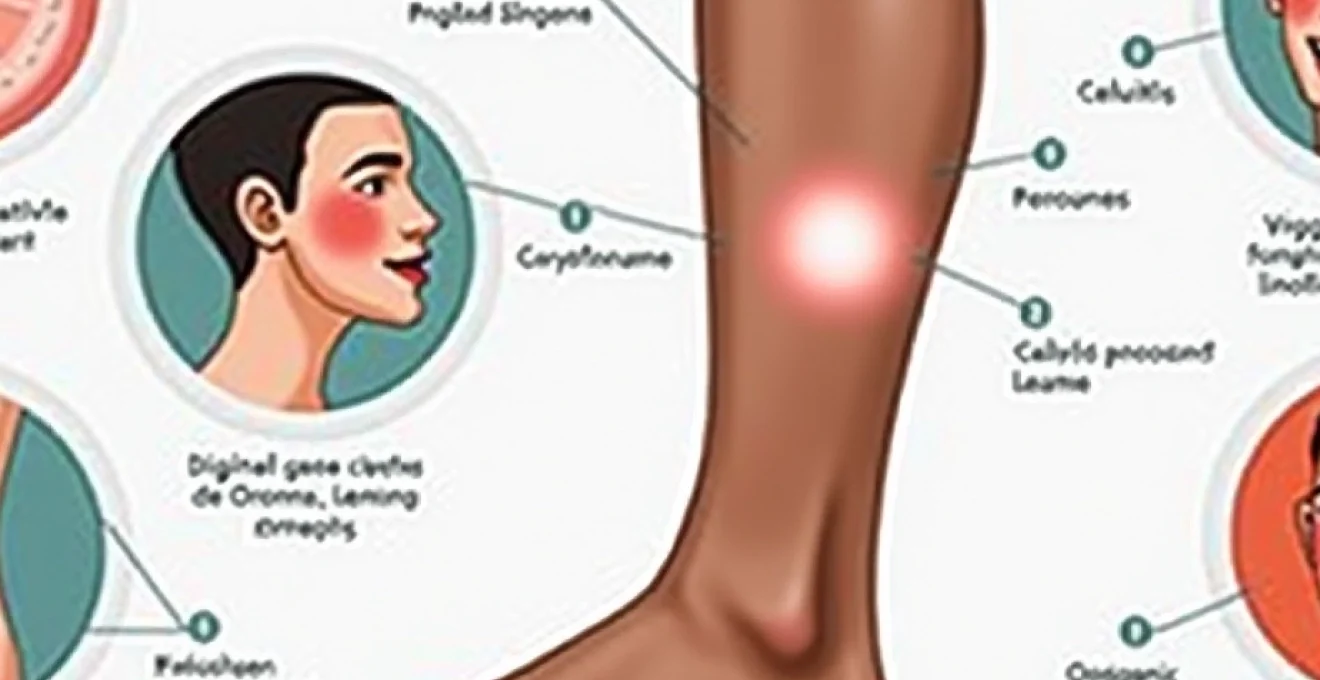
Discovering a soft, squishy lump on your shin can be a concerning experience that immediately raises questions about its origin and significance. The anterior shin area, or tibial region, is a common location for various types of masses due to its relatively superficial anatomy and exposure to trauma. While many shin lumps are benign and pose no serious health threat, understanding the different possibilities can help you make informed decisions about when to seek medical attention.
The characteristics of a shin lump—particularly its consistency, mobility, and associated symptoms—provide valuable diagnostic clues. A squishy or soft texture typically suggests fluid-filled or fatty compositions, which often indicate less concerning pathologies compared to hard, fixed masses. However, the location on the shin presents unique considerations, as this area contains minimal subcutaneous tissue and sits directly over the tibia bone, making any abnormality more noticeable and potentially more significant.
Various conditions can manifest as soft lumps on the shin, ranging from simple cysts and fatty deposits to inflammatory processes and vascular abnormalities. The key lies in recognising the distinguishing features of each condition and understanding when professional medical evaluation becomes necessary for proper diagnosis and management.
Common benign causes of shin lumps and nodules
Lipomas: subcutaneous fatty tissue accumulations
Lipomas represent one of the most frequent causes of soft, squishy lumps found on the shin. These benign fatty tumours develop within the subcutaneous tissue layer and feel characteristically doughy or rubbery to the touch. Lipomas are typically mobile , meaning they can be moved around under the skin when pressed, and they’re usually painless unless they grow large enough to compress surrounding structures.
On the shin, lipomas tend to be smaller than those found in areas with more abundant fatty tissue, such as the back or shoulders. They grow slowly over months or years and maintain a consistent soft texture throughout their development. The overlying skin appears normal, without discoloration or inflammatory changes, which helps distinguish lipomas from other types of masses.
Sebaceous cysts: Keratin-Filled epidermal inclusions
Sebaceous cysts, more accurately termed epidermoid cysts, can develop anywhere on the body, including the shin area. These fluid-filled sacs contain keratin and cellular debris, giving them a distinctly soft, fluctuant feel when palpated. Unlike lipomas, sebaceous cysts often have a visible central punctum—a small, dark spot that represents the blocked hair follicle or pore that led to cyst formation.
These cysts can vary in size from a few millimetres to several centimetres in diameter. They may remain stable for years or occasionally become infected, leading to rapid enlargement, redness, warmth, and tenderness. Infected sebaceous cysts require prompt medical attention and may need drainage or antibiotic treatment to prevent complications.
Ganglion cysts: synovial fluid collections
Though more commonly associated with wrist and ankle joints, ganglion cysts can occasionally develop near the shin area, particularly around the ankle joint or along tendon sheaths that extend into the lower leg region. These cysts contain synovial fluid—the same lubricating fluid found in joints—which gives them a characteristic jelly-like consistency.
Ganglion cysts typically feel firm but compressible, and their size may fluctuate depending on activity levels and joint movement. They’re often more prominent after periods of increased activity and may become less noticeable during rest periods. While generally painless, larger ganglion cysts can cause discomfort when they press against nerves or interfere with normal movement patterns.
Dermatofibromas: benign fibrous histiocytomas
Dermatofibromas present as firm, raised nodules that can occasionally feel soft or squishy, particularly in their early stages of development. These benign lesions often result from minor trauma, such as insect bites or small cuts, and represent the skin’s healing response gone slightly awry. On the shin, where minor trauma from bumps and scrapes is common, dermatofibromas can develop as small, flesh-coloured to brown nodules.
A characteristic feature of dermatofibromas is the “dimple sign”—when you pinch the surrounding skin, the lesion appears to dimple inward rather than protrude outward. This occurs because the fibrous tissue is tethered to deeper skin layers, creating this distinctive diagnostic sign that helps differentiate dermatofibromas from other types of skin lesions.
Inflammatory and infectious shin mass presentations
Cellulitis: bacterial soft tissue infections
Bacterial cellulitis affecting the shin region can create areas of soft tissue swelling that may feel squishy or boggy to the touch. This deep skin and soft tissue infection typically develops following minor trauma, cuts, or abrasions that provide an entry point for bacteria. The affected area becomes red, warm, swollen, and tender, with the inflammation often spreading beyond the initial site of infection.
In cases of cellulitis, the “lump” is actually diffuse tissue swelling rather than a discrete mass. The skin may have a pitted orange-peel appearance, and you might experience systemic symptoms such as fever, chills, and malaise. Untreated cellulitis can progress to serious complications , including abscess formation or bloodstream infection, making prompt antibiotic treatment essential.
Erythema nodosum: Panniculitis-Associated nodules
Erythema nodosum presents as tender, red nodules that typically appear on the shins and feel firm initially but may become softer as they evolve. This inflammatory condition affects the fat layer beneath the skin (panniculitis) and often occurs as a reaction to various triggers, including infections, medications, or underlying systemic diseases such as inflammatory bowel disease or sarcoidosis.
The nodules of erythema nodosum characteristically change colour over time, progressing from bright red to purple, then to brownish-yellow as they resolve, much like a bruise healing.
These lesions are typically bilateral and symmetrical, appearing on both shins simultaneously. They’re often accompanied by joint pain, particularly in the knees and ankles, and may be associated with fever and general malaise. The condition usually resolves spontaneously over several weeks to months, but identifying and treating any underlying trigger is important for preventing recurrence.
Pyogenic granulomas: vascular proliferative lesions
Despite their name, pyogenic granulomas are neither infectious nor granulomatous. These benign vascular proliferations can develop on the shin following minor trauma and present as soft, reddish nodules that bleed easily when touched. They grow rapidly over weeks to months and have a characteristic friable, raspberry-like appearance.
The soft, squishy texture of pyogenic granulomas results from their high vascular content and loose connective tissue structure. They may be pedunculated (on a stalk) or sessile (broad-based), and their tendency to bleed with minimal trauma often brings them to medical attention. While benign, these lesions require proper evaluation to distinguish them from malignant vascular tumours.
Pilonidal sinus tract complications
Though pilonidal sinuses typically occur in the sacrococcygeal region, similar sinus tract formations can rarely develop on the shin, particularly in individuals with occupations involving prolonged kneeling or crawling. These tracts can become infected and form soft, fluctuant masses that may discharge purulent material.
The affected area often shows signs of chronic inflammation, with surrounding skin appearing thickened and sometimes hyperpigmented. Secondary bacterial infection of these sinus tracts can lead to abscess formation, creating soft, tender masses that require surgical drainage and definitive treatment of the underlying sinus tract.
Vascular abnormalities manifesting as shin masses
Vascular abnormalities can present as soft, compressible lumps on the shin that may change in size with position or activity. Arteriovenous malformations (AVMs) and venous malformations are congenital vascular anomalies that can manifest anywhere on the body, including the lower extremities. These lesions feel soft and squishy due to their vascular nature, and larger lesions may have a pulsatile quality or exhibit a thrill when palpated.
Venous malformations, in particular, can be mistaken for simple cysts due to their soft, compressible nature. However, they often have a bluish discoloration of the overlying skin and may become more prominent when the limb is in a dependent position. These lesions can slowly enlarge over time and may cause symptoms such as pain, especially after prolonged standing or physical activity.
Haemangiomas, particularly deep or intramuscular variants, can also present as soft masses in the shin region. Unlike the bright red, raised lesions typically seen in infancy, deep haemangiomas may appear as skin-coloured or slightly bluish soft lumps. They may exhibit rapid growth phases followed by periods of stabilisation, and some may show spontaneous regression over time.
Varicose veins in atypical locations can occasionally present as soft, serpentine masses along the shin. These dilated, tortuous veins may be palpable as soft, rope-like structures beneath the skin and often become more prominent with standing or Valsalva manoeuvres. The diagnosis becomes clearer when the lesion can be compressed and emptied, then refills when compression is released.
Musculoskeletal pathologies presenting as palpable shin lumps
Several musculoskeletal conditions can manifest as soft or semi-soft lumps along the shin region. Muscle hernias, while more common in the thigh, can occasionally occur in the anterior compartment of the lower leg. These present as soft bulges that become more prominent with muscle contraction or increased intra-abdominal pressure, such as coughing or straining. The hernia occurs when muscle fibres protrude through defects in the surrounding fascia, creating a palpable mass that may be reducible when relaxed.
Chronic compartment syndrome can lead to muscle hypertrophy and fascial thickening that may be palpable as firmness or subtle swelling along the affected compartment. While not typically presenting as discrete lumps, the condition can cause noticeable changes in lower leg contour and consistency. Exercise-induced symptoms such as pain, tightness, and numbness often accompany these physical findings.
Myositis ossificans, though rare in the shin region, can develop following significant trauma or repeated minor injuries. This condition involves the formation of bone and cartilage within muscle tissue, initially presenting as a soft, painful mass that gradually hardens over weeks to months. The early stages may feel squishy due to haematoma formation and inflammatory response, before calcification and ossification occur.
Stress fractures of the tibia, particularly in their early stages, can sometimes present with localised soft tissue swelling that feels squishy or boggy, representing the body’s inflammatory response to bone injury.
Soft tissue sarcomas, while rare, must be considered in the differential diagnosis of shin masses. These malignant tumours can present as soft, rapidly growing masses that may initially be mistaken for benign conditions. However, concerning features such as large size (greater than 5 centimetres), rapid growth, fixation to underlying structures, and associated systemic symptoms should prompt urgent medical evaluation and imaging studies.
Diagnostic imaging protocols for shin mass evaluation
When evaluating a squishy lump on the shin, healthcare providers typically employ a systematic approach to imaging studies based on clinical findings and suspected diagnoses. Ultrasound imaging serves as an excellent first-line investigation for soft tissue masses, providing real-time visualisation of the lesion’s internal structure, vascularity, and relationship to surrounding tissues. This non-invasive modality can effectively distinguish between solid and cystic lesions, assess blood flow patterns, and guide procedures such as fine-needle aspiration when necessary.
For lesions suspected of having deeper extension or involvement of underlying structures, magnetic resonance imaging (MRI) provides superior soft tissue contrast and detailed anatomical information. MRI can accurately characterise the signal characteristics of different tissue types, helping to differentiate between fat, fluid, blood products, and solid tissues. T1 and T2-weighted sequences, along with contrast-enhanced images, provide complementary information about lesion composition and vascularity.
Computed tomography (CT) scanning may be employed when bony involvement is suspected or when detailed evaluation of calcification patterns is needed. CT is particularly useful for assessing myositis ossificans, stress fractures, or other bone-related pathologies that might present with associated soft tissue swelling. The cross-sectional imaging capability allows for precise localisation and measurement of lesions.
Doppler ultrasound studies play a crucial role in evaluating suspected vascular abnormalities, providing information about blood flow direction, velocity, and patterns within the lesion. This technique is essential for diagnosing arteriovenous malformations, venous malformations, and other vascular anomalies that might present as soft, pulsatile masses on the shin.
Red flag symptoms requiring immediate medical assessment
Several warning signs associated with shin lumps warrant urgent medical evaluation and should never be ignored. Rapid growth over days to weeks suggests an aggressive process that could represent infection, malignancy, or other serious pathology requiring immediate attention. Any lump that doubles in size within a short timeframe needs prompt assessment, particularly if accompanied by systemic symptoms such as fever, weight loss, or night sweats.
Changes in skin colour overlying the lump, particularly the development of redness, warmth, or a dusky blue appearance, may indicate infection, inflammation, or vascular compromise. Skin breakdown, ulceration, or spontaneous bleeding from the lump suggests advanced pathology that requires urgent intervention. These changes often indicate that the underlying process has progressed beyond simple benign conditions.
- Progressive pain that worsens despite rest and over-the-counter pain medications
- Associated neurological symptoms such as numbness, tingling, or weakness in the leg or foot
- Signs of systemic infection including fever, chills, and malaise
- Inability to bear weight or significant functional impairment
- Pulsatile quality to the mass, especially if associated with a bruit or thrill
The development of satellite lesions—additional lumps appearing near the original mass—can indicate spreading infection, metastatic disease, or multifocal inflammatory conditions requiring comprehensive evaluation. Similarly, regional lymph node enlargement in the groin or behind the knee may suggest that the shin lump represents part of a more extensive pathological process.
Patients with a personal history of cancer should be particularly vigilant about new lumps or masses, as these could represent metastatic disease or treatment-related complications. Similarly, individuals with compromised immune systems, diabetes, or peripheral vascular disease face higher risks of serious complications from seemingly benign lumps and should seek medical evaluation more readily than healthy individuals. Understanding these risk factors and warning signs empowers patients to make appropriate decisions about when to seek medical care, ensuring that serious conditions receive timely diagnosis and treatment while avoiding unnecessary anxiety about benign processes.