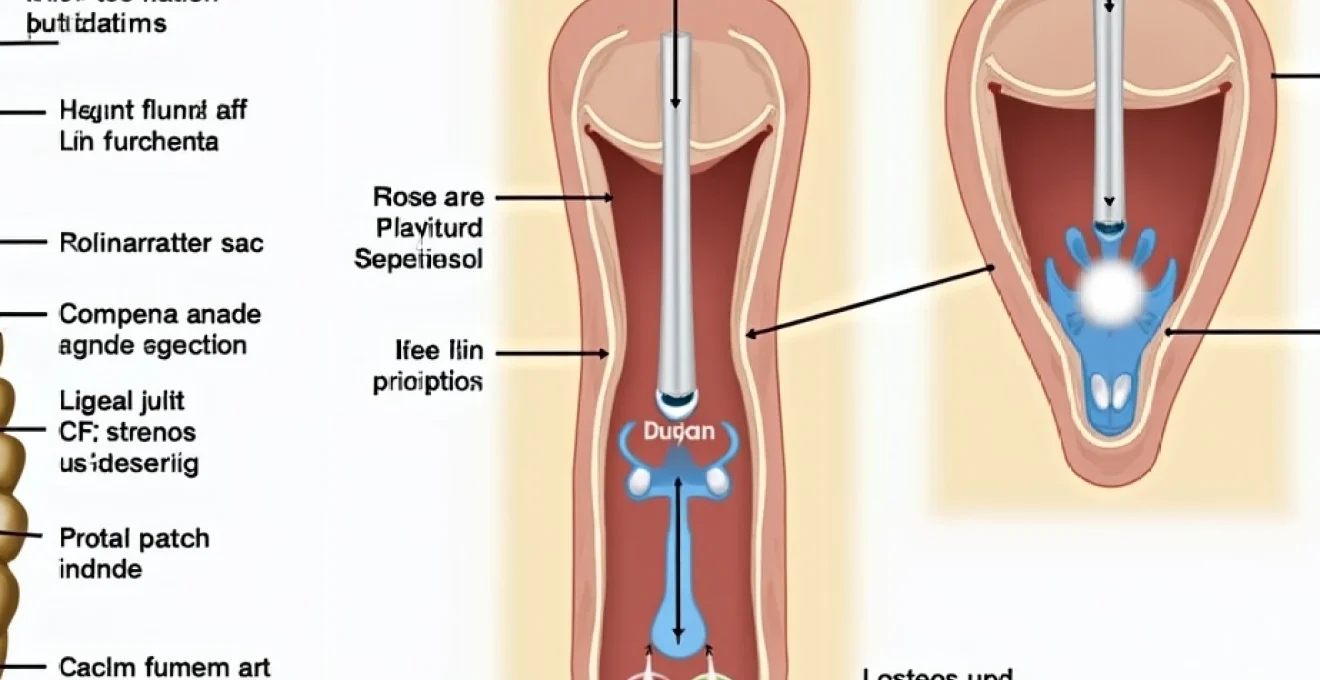
Spinal health concerns affect millions of individuals worldwide, with thecal sac effacement representing one of the most significant yet often misunderstood conditions encountered in spinal imaging. This anatomical compromise occurs when the protective membrane surrounding the spinal cord becomes compressed or flattened, potentially leading to debilitating neurological symptoms. Understanding the intricate mechanisms behind this condition becomes crucial for both medical professionals and patients navigating complex spinal disorders.
The thecal sac serves as a vital protective barrier, containing cerebrospinal fluid that cushions the delicate neural structures within the spinal canal. When this protective envelope becomes compromised through various pathological processes, the resulting effacement can significantly impact quality of life. Modern diagnostic imaging techniques have revolutionised our ability to identify and quantify these changes, providing invaluable insights into the severity and progression of spinal stenosis.
Thecal sac anatomy and normal cerebrospinal fluid dynamics
The thecal sac represents a sophisticated anatomical structure that extends from the foramen magnum at the skull’s base to approximately the second sacral vertebra. This tubular membrane system consists of three distinct layers: the outer dura mater, the delicate arachnoid mater, and the innermost pia mater that directly contacts the spinal cord. Together, these layers create a watertight compartment filled with cerebrospinal fluid, providing both mechanical protection and metabolic support to the central nervous system.
Dural mater structure and cerebrospinal fluid containment
The dura mater forms the outermost and most robust layer of the thecal sac, comprising dense fibrous tissue that maintains structural integrity under normal physiological conditions. This tough membrane contains approximately 150 millilitres of cerebrospinal fluid in adults, creating a pressurised environment that supports optimal neural function. The dural membrane demonstrates remarkable elasticity, allowing for natural expansion and contraction during daily activities whilst maintaining protective boundaries around the spinal cord.
Subarachnoid space configuration in the spinal canal
Between the arachnoid and pia mater lies the subarachnoid space, where cerebrospinal fluid circulates freely around the spinal cord and nerve roots. This space varies in dimensions throughout different spinal levels, typically measuring widest in the lumbar region where the conus medullaris terminates. The configuration of this space directly influences cerebrospinal fluid flow patterns and determines the extent to which external compression can compromise neural structures.
Normal thecal sac dimensions from C1 to S2 vertebral levels
Anatomical studies reveal significant variations in thecal sac dimensions across different spinal levels, with cervical measurements typically ranging from 14-18 millimetres in anteroposterior diameter. Thoracic levels demonstrate more consistent measurements due to the stabilising influence of the ribcage, whilst lumbar dimensions show the greatest variability. The L4-L5 and L5-S1 levels, commonly affected by degenerative changes, normally maintain anteroposterior diameters of 15-20 millimetres in healthy individuals.
Cerebrospinal fluid flow patterns and pulsatile motion
Cerebrospinal fluid demonstrates complex flow dynamics influenced by cardiac pulsation, respiratory variations, and postural changes. This continuous circulation pattern ensures optimal nutrient delivery and waste removal whilst maintaining appropriate intrathecal pressure. Disruption of these flow patterns through thecal sac compression can lead to localised pressure changes and subsequent neurological symptoms, highlighting the importance of maintaining adequate subarachnoid space dimensions.
Pathophysiological mechanisms behind thecal sac effacement
The development of thecal sac effacement involves complex interactions between degenerative spinal changes and mechanical compression forces. Understanding these pathophysiological processes becomes essential for accurate diagnosis and appropriate treatment planning. Multiple anatomical structures can contribute to progressive thecal sac compromise, with each mechanism presenting distinct imaging characteristics and clinical manifestations that require specialised evaluation techniques.
Disc Herniation-Induced compression at L4-L5 and L5-S1 levels
Intervertebral disc herniation represents the most common cause of acute thecal sac effacement, particularly affecting the lower lumbar spine where mechanical stresses concentrate during daily activities. When the nucleus pulposus migrates through tears in the annulus fibrosus, it can create focal compression points that dramatically reduce available space within the spinal canal. Large central disc herniations can cause severe thecal sac deformation , with imaging studies often revealing complete obliteration of cerebrospinal fluid signal on magnetic resonance sequences.
Ligamentum flavum hypertrophy and posterior compression
Age-related changes in the ligamentum flavum contribute significantly to progressive spinal stenosis and subsequent thecal sac effacement. This elastic ligament, normally measuring 2-5 millimetres in thickness, can hypertrophy to exceed 10 millimetres in severely affected individuals. The resulting posterior compression creates a characteristic “trefoil” appearance of the thecal sac on axial imaging, with bilateral indentations that progressively worsen over time without appropriate intervention.
Facet joint arthropathy and lateral recess stenosis
Degenerative changes affecting the facet joints create complex three-dimensional alterations in spinal canal anatomy, often resulting in asymmetric thecal sac compression patterns. Facet joint hypertrophy and synovial cyst formation can significantly reduce lateral recess dimensions, creating focal areas of neural compression that may not be apparent on standard imaging views. These changes frequently occur in conjunction with other degenerative processes, creating a cumulative effect on thecal sac morphology.
Osteophyte formation and central canal narrowing
Osteophyte development represents the body’s attempt to stabilise degenerative spinal segments, but these bony growths can paradoxically worsen spinal stenosis and thecal sac compression. Posterior osteophytes arising from the vertebral body margins can project into the central canal, creating rigid compression points that resist conservative treatment approaches. The combination of anterior disc bulging and posterior osteophyte formation can create severe “sandwich” compression of the thecal sac, necessitating surgical decompression in many cases.
MRI imaging characteristics of thecal sac compromise
Modern magnetic resonance imaging techniques provide unprecedented detail regarding thecal sac morphology and the extent of cerebrospinal fluid compromise. Advanced imaging protocols utilise multiple pulse sequences to comprehensively evaluate spinal canal anatomy, with each sequence offering unique advantages for assessing different aspects of thecal sac pathology. The integration of these imaging findings with clinical symptoms creates a comprehensive picture that guides appropriate treatment decisions.
T2-weighted sagittal sequences and CSF signal loss
T2-weighted sagittal images demonstrate cerebrospinal fluid as bright signal intensity, allowing for immediate visual assessment of thecal sac compromise. Areas of severe stenosis appear as focal constrictions or complete signal loss, indicating significant cerebrospinal fluid effacement . The degree of signal loss correlates with stenosis severity, with grade 4 stenosis showing complete obliteration of visible cerebrospinal fluid signal. These sequences also reveal dynamic changes that occur with spinal flexion and extension, providing valuable information about functional stenosis patterns.
Axial T1 and T2 imaging protocol for stenosis assessment
Axial imaging sequences provide cross-sectional views that allow precise measurement of thecal sac dimensions and assessment of compression symmetry. T2-weighted axial images clearly delineate the interface between cerebrospinal fluid and surrounding tissues, enabling accurate quantification of stenosis severity. T1-weighted sequences offer superior anatomical detail for identifying specific pathological structures responsible for thecal sac compression, including disc material, ligamentum flavum, and bony elements.
Myelographic effect evaluation on STIR sequences
Short Tau Inversion Recovery (STIR) sequences provide exceptional contrast between cerebrospinal fluid and surrounding tissues, creating a natural “myelographic effect” without the need for contrast injection. These sequences particularly excel at demonstrating subtle degrees of thecal sac effacement that might be overlooked on conventional T2-weighted images. STIR imaging also helps differentiate between various tissue types contributing to spinal stenosis, providing valuable information for surgical planning and prognostic assessment.
Clinical correlation between imaging findings and neurological symptoms
The relationship between imaging findings and clinical symptoms in thecal sac effacement demonstrates considerable complexity, with some patients showing severe radiological changes yet minimal symptoms, while others experience debilitating pain with relatively mild imaging abnormalities. This phenomenon, known as the “imaging-symptom paradox,” highlights the importance of comprehensive clinical evaluation that extends beyond radiological findings alone.
Neurological symptoms associated with thecal sac effacement typically develop gradually, reflecting the progressive nature of most underlying pathological processes. Neurogenic claudication represents the hallmark symptom of central spinal stenosis, characterised by leg pain, weakness, and numbness that worsens with walking and improves with rest or forward flexion. The distance patients can walk before symptoms develop, known as the claudication distance, provides valuable information about functional capacity and treatment urgency.
Sensory disturbances often precede motor symptoms in cases of progressive thecal sac compression, with patients reporting numbness, tingling, or burning sensations in the legs and feet. These symptoms typically follow dermatomal distributions corresponding to the affected nerve roots, though central compression can create more diffuse sensory changes. Motor weakness, when present, usually affects the lower extremities and can progress to significant functional impairment if left untreated.
The degree of thecal sac effacement visible on imaging studies does not always correlate directly with symptom severity, emphasising the importance of comprehensive clinical assessment in treatment planning.
Bladder and bowel dysfunction represent serious complications that can occur with severe central stenosis and massive thecal sac compression. These symptoms indicate potential cauda equina syndrome, a surgical emergency requiring immediate decompression to prevent permanent neurological damage. Patients with severe thecal sac effacement should be counselled about recognising these warning signs and seeking immediate medical attention if they develop.
Grading systems for spinal stenosis and thecal sac deformation
Standardised grading systems provide objective methods for quantifying the severity of thecal sac effacement and communicating findings between healthcare providers. The most widely adopted classification system utilises a four-grade scale based on cerebrospinal fluid visibility on T2-weighted MRI sequences. Grade 1 represents mild stenosis with preserved cerebrospinal fluid signal, while Grade 4 indicates complete signal obliteration with severe thecal sac compression.
| Grade | Description | CSF Signal | Treatment Implications |
|---|---|---|---|
| Grade 1 | Mild stenosis | Clearly visible | Conservative management |
| Grade 2 | Moderate stenosis | Reduced but present | Conservative trial |
| Grade 3 | Severe stenosis | Minimal visibility | Surgical consideration |
| Grade 4 | Extreme stenosis | Complete obliteration | Surgical intervention |
Cross-sectional area measurements provide additional quantitative assessment methods, with normal thecal sac areas typically measuring 100-200 square millimetres at lumbar levels. Areas below 76 square millimetres correlate with increased symptom severity, while measurements below 50 square millimetres often indicate the need for surgical intervention. These measurements help standardise treatment decisions and provide objective criteria for monitoring disease progression over time.
The anteroposterior diameter represents another important measurement parameter, with values below 10 millimetres generally considered indicative of significant stenosis. However, the clinical significance of these measurements must always be interpreted within the context of patient symptoms and functional capacity. Some individuals tolerate severe radiological stenosis with minimal symptoms, while others experience significant disability with relatively mild imaging changes.
Treatment approaches for severe thecal sac effacement cases
Management strategies for severe thecal sac effacement require individualised approaches that consider patient symptoms, functional capacity, overall health status, and specific anatomical factors contributing to the compression. Conservative treatment options remain the initial approach for most patients, with surgical intervention reserved for those who fail to respond to non-operative measures or develop progressive neurological deficits.
Non-surgical treatment modalities focus on symptom management and functional improvement rather than addressing the underlying anatomical compression. Physical therapy programmes emphasising spinal flexion exercises can help improve walking tolerance by temporarily increasing spinal canal dimensions. Epidural steroid injections provide targeted anti-inflammatory treatment that can offer significant symptom relief, particularly when combined with comprehensive rehabilitation programmes.
Pharmacological management includes various medication classes designed to address different aspects of the pain and neurological symptoms associated with thecal sac effacement. Neuropathic pain medications such as gabapentin and pregabalin specifically target nerve-related pain, while anti-inflammatory medications help reduce local tissue inflammation. Muscle relaxants may provide additional benefit for patients experiencing secondary muscle spasm related to altered gait patterns and postural compensations.
Surgical decompression becomes necessary when conservative treatments fail to provide adequate symptom relief or when patients develop progressive neurological deficits. Laminectomy procedures directly address the anatomical compression by removing bony elements that impinge upon the thecal sac. The extent of decompression required depends on the specific pathological processes involved, with some patients requiring additional procedures such as discectomy or fusion to achieve optimal outcomes.
Success rates for surgical decompression in appropriately selected patients with severe thecal sac effacement typically exceed 80%, with most individuals experiencing significant improvement in walking tolerance and pain levels.
Minimally invasive surgical techniques have revolutionised the treatment of spinal stenosis, offering reduced tissue trauma and faster recovery times compared to traditional open procedures. These approaches utilise smaller incisions and specialised instrumentation to achieve adequate decompression while preserving normal spinal anatomy. Patient selection criteria for minimally invasive procedures continue to expand as surgical techniques and instrumentation improve, offering hope for individuals who previously faced more extensive surgical interventions.