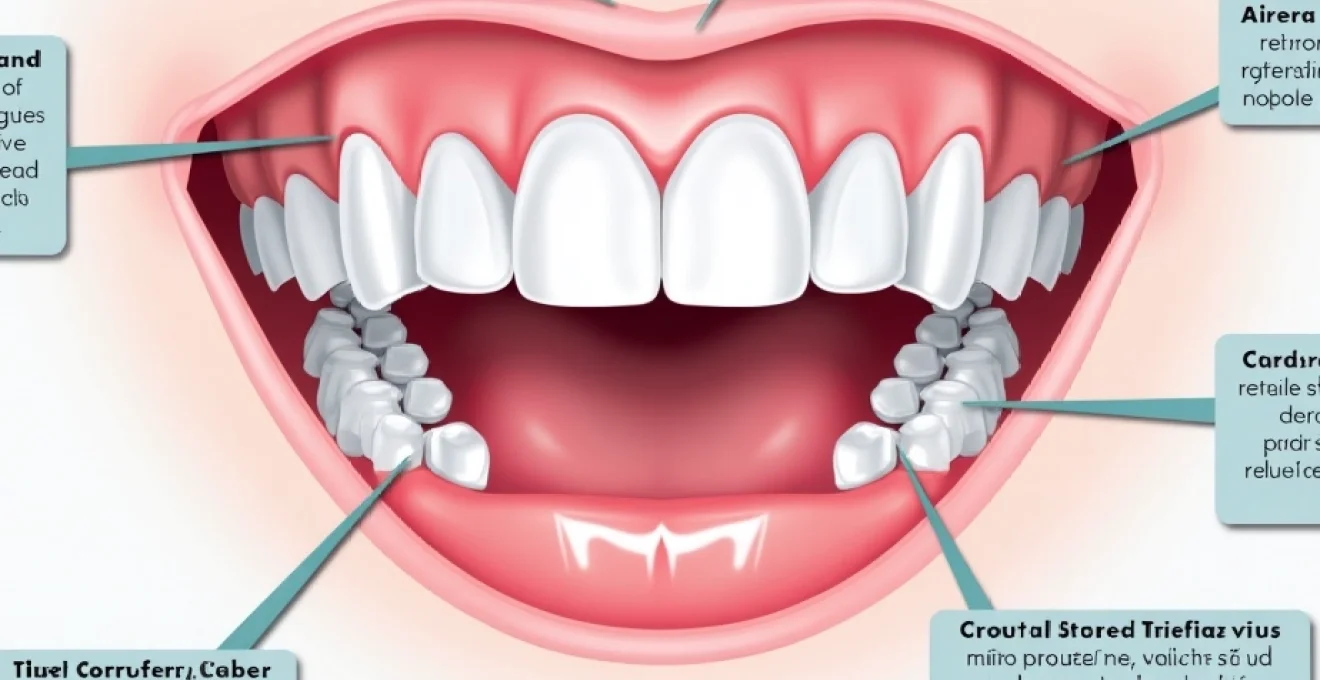
Orthodontic retainers represent a crucial component of post-treatment care, yet many patients experience an unexpected and uncomfortable side effect: the gag reflex. This involuntary response can transform what should be a routine part of maintaining straight teeth into a distressing experience that compromises treatment compliance. Understanding why retainers trigger gagging responses is essential for both patients and practitioners, as it allows for targeted interventions that can dramatically improve comfort and treatment outcomes.
The prevalence of retainer-induced gagging varies significantly among individuals, with studies suggesting that approximately 15-25% of patients experience some degree of difficulty with their appliances. This physiological response stems from complex interactions between anatomical structures, neurological pathways, and psychological factors. While the gag reflex serves as a protective mechanism preventing foreign objects from entering the pharynx, it can become hyperactive when confronted with orthodontic appliances, creating a challenging situation for patients committed to maintaining their orthodontic results.
Anatomical factors contributing to Retainer-Induced gag reflex
The human oral cavity presents a delicate balance of structures that work harmoniously during normal function. When orthodontic retainers are introduced into this environment, they can disrupt established patterns of tongue positioning, airflow, and spatial relationships. The posterior regions of the mouth contain highly sensitive tissues that have evolved to detect and respond to foreign objects, making them particularly reactive to retainer placement.
Palatal coverage and soft tissue stimulation
Traditional retainers, particularly Hawley-style appliances, feature acrylic components that cover varying portions of the hard palate. This coverage can stimulate mechanoreceptors within the palatal tissues, triggering sensory pathways that culminate in gag reflex activation. The density and distribution of these sensory receptors vary considerably among individuals, explaining why some patients tolerate extensive palatal coverage while others struggle with minimal contact.
The thickness of palatal tissues also influences sensitivity levels. Patients with thinner palatal tissues often experience heightened sensitivity to retainer contact, as the underlying bone structures are closer to the surface. Additionally, the transition zones where retainer edges meet soft tissues can create pressure points that generate uncomfortable sensations, particularly during the initial adaptation period.
Tongue space reduction and posterior displacement
Retainers inevitably alter the available space within the oral cavity, forcing the tongue to adapt to new spatial constraints. This adaptation process can be particularly challenging for individuals with naturally large tongues or those accustomed to specific tongue posturing patterns. When tongue space is reduced, the organ may be displaced posteriorly, bringing it into closer contact with sensitive pharyngeal tissues.
The tongue’s relationship with the soft palate becomes especially critical during swallowing and speech. Retainers can interfere with these natural functions, creating a cascade of compensatory movements that may inadvertently stimulate gag-sensitive areas. The body’s attempt to accommodate foreign objects often results in exaggerated tongue movements , which can perpetuate gagging sensations.
Pharyngeal airway obstruction mechanisms
Even minimal changes in oral volume can affect airflow patterns and create sensations of obstruction. Retainers may alter the cross-sectional area of the oropharynx, particularly in the velopharyngeal region where the soft palate meets the posterior pharyngeal wall. This alteration can trigger protective reflexes designed to maintain airway patency.
The sensation of reduced airflow, whether real or perceived, can activate anxiety responses that amplify gag reflex sensitivity. Patients often report feeling as though they cannot breathe properly with their retainers in place, even when objective measurements show no significant airway compromise. This psychological component can significantly exacerbate the physiological gag response.
Individual anatomical variations in oral cavity dimensions
Significant anatomical variations exist among individuals in terms of palatal height, pharyngeal depth, and tongue size relative to oral cavity volume. Patients with high, narrow palates may be more susceptible to retainer-induced gagging due to the proximity of appliances to sensitive palatal tissues. Conversely, those with low, broad palates may experience fewer sensitivity issues.
The anteroposterior dimensions of the oral cavity also play a crucial role. Individuals with shorter oral cavities may find that standard retainer designs extend too far posteriorly, encroaching on gag-sensitive zones. These anatomical variations underscore the importance of individualised retainer design and fitting protocols .
Types of retainers and their gagging potential
Different retainer designs present varying challenges in terms of gag reflex stimulation. Understanding these distinctions allows practitioners to select appropriate appliances based on individual patient anatomy and sensitivity levels. The relationship between retainer design and gagging potential involves multiple factors including material properties, coverage area, thickness, and edge finishing.
Hawley retainers and acrylic palatal coverage issues
Hawley retainers, characterised by their wire and acrylic construction, present unique challenges related to their palatal coverage patterns. The acrylic component typically extends across the hard palate, creating a barrier between the tongue and natural oral tissues. This extensive coverage can stimulate multiple sensory pathways simultaneously, overwhelming the patient’s ability to adapt comfortably.
The thickness of traditional Hawley retainer acrylic, often ranging from 2-3 millimetres, can create significant volume displacement within the oral cavity. The edges of the acrylic component, if not properly finished, can create sharp transitions that irritate soft tissues and trigger protective reflexes. Additionally, the clasping mechanisms used to secure Hawley retainers can extend into posterior regions where gag sensitivity is heightened.
The traditional Hawley design, while durable and adjustable, presents the greatest challenge for patients with sensitive gag reflexes due to its extensive palatal coverage and substantial bulk.
Essix clear retainers and posterior extension problems
Clear aligners and Essix-style retainers offer improved aesthetics and reduced bulk compared to traditional appliances, yet they present their own gagging challenges. The posterior extension of these appliances, necessary to maintain retention on second molars, can extend into highly sensitive regions of the oral cavity. The thin plastic material, while less bulky than acrylic, can still create uncomfortable sensations when it contacts soft tissues.
The flexibility of thermoplastic materials used in clear retainers can actually exacerbate gagging in some patients. Unlike rigid acrylic, which provides consistent contact patterns, flexible materials may move and shift during wear, creating unpredictable stimulation of sensitive areas. This movement can prevent habituation to the appliance, prolonging the adaptation period.
Fixed lingual retainers and tongue positioning conflicts
Bonded lingual retainers, while eliminating many removable appliance issues, can create their own set of challenges related to tongue positioning and function. The wire components, typically placed on the lingual surfaces of anterior teeth, can interfere with normal tongue posturing during rest and function. This interference may force the tongue into unnatural positions that bring it into contact with posterior sensitive tissues.
The presence of bonding material and wire creates surface irregularities that the tongue must navigate during speech and swallowing. These irregularities can trigger hypervigilant responses in sensitive patients , leading to increased awareness of the appliance and potential gag reflex activation during functional movements.
Vivera retainers thickness and Bulk-Related sensitivity
Vivera retainers, manufactured using advanced 3D printing technology, offer improved fit and durability compared to conventional clear retainers. However, their increased material thickness, designed to enhance longevity, can contribute to gagging issues in susceptible patients. The additional bulk, while minimal, can push these appliances beyond the comfort threshold for individuals with heightened sensitivity.
The precision fit of Vivera retainers, while generally advantageous, can create very specific contact patterns that some patients find uncomfortable. The consistent pressure distribution, achieved through advanced manufacturing techniques, may not align with individual comfort preferences, particularly in posterior regions where sensitivity is greatest.
Neurological mechanisms behind retainer gag response
The gag reflex represents a complex neurological phenomenon involving multiple cranial nerves, brainstem centres, and efferent pathways. Understanding these mechanisms provides insight into why certain interventions are effective and helps guide treatment strategies for patients struggling with retainer tolerance. The interplay between sensory input, central processing, and motor output creates a system that can be both protective and problematic.
Glossopharyngeal nerve hypersensitivity patterns
The glossopharyngeal nerve (cranial nerve IX) serves as the primary sensory pathway for gag reflex initiation, innervating the posterior third of the tongue, soft palate, and pharyngeal tissues. When retainers contact these areas, they stimulate glossopharyngeal sensory fibres, initiating a cascade of neural events. In some individuals, this nerve pathway demonstrates heightened sensitivity, responding to minimal stimulation with exaggerated reflex activity.
Hypersensitivity patterns within the glossopharyngeal system can develop through various mechanisms, including previous traumatic experiences, chronic irritation, or genetic predisposition. Once established, these patterns can create persistent challenges for retainer tolerance, requiring targeted intervention strategies to achieve desensitisation.
Vagal stimulation and parasympathetic response triggers
The vagus nerve (cranial nerve X) contributes to gag reflex responses through its parasympathetic functions, influencing salivary production, gastric motility, and cardiovascular responses. Retainer-induced vagal stimulation can create a constellation of symptoms beyond simple gagging, including nausea, increased salivation, and autonomic instability.
The vagal component of gag responses often explains why some patients experience systemic symptoms when wearing retainers. The connection between oral stimulation and vagal responses demonstrates the integrated nature of protective reflexes , highlighting why comprehensive management approaches are often necessary for successful treatment.
Central nervous system processing of oral foreign objects
The brainstem contains specialised centres responsible for integrating sensory information and coordinating appropriate motor responses. The medulla oblongata houses the primary gag reflex centre, which processes incoming sensory data and determines the intensity and duration of protective responses. Individual variations in central processing capabilities can significantly influence retainer tolerance.
Neuroplasticity within these central pathways allows for adaptation over time, explaining why many patients who initially struggle with retainer tolerance eventually develop comfort with their appliances. However, this adaptation process can be highly variable, with some patients achieving rapid habituation while others require extended periods or intervention.
Clinical assessment of gag reflex severity
Accurate assessment of gag reflex severity provides the foundation for appropriate treatment planning and intervention selection. Clinical evaluation must consider both physiological responses and psychological factors that contribute to patient discomfort. Standardised assessment protocols allow practitioners to objectively evaluate severity levels and track improvement over time.
The Gasson Classification system represents one widely accepted framework for categorising gag reflex severity, ranging from mild (Grade I) to severe (Grade V) responses. This classification considers both the stimulus intensity required to trigger responses and the anatomical zones involved. Grade I responses require contact with the soft palate or fauces, while Grade V responses can be triggered by visual stimuli or even the thought of oral procedures.
Assessment should include evaluation of temporal factors, as gag responses may vary throughout the day or in different emotional states. Some patients experience heightened sensitivity during stress or fatigue, while others may find certain times of day more challenging. Documentation of these patterns can guide timing recommendations for retainer wear and intervention protocols.
Comprehensive assessment must address both the physiological gag response and the psychological factors that can amplify or diminish patient tolerance, as these elements interact to determine overall treatment success.
Objective measures, such as the distance from incisors to the point of gag initiation, can provide quantifiable data for monitoring progress. Additionally, patient-reported outcome measures focusing on comfort levels, wear time achieved, and functional impacts offer valuable insights into treatment effectiveness from the patient’s perspective.
Evidence-based management strategies for retainer gagging
Successful management of retainer-induced gagging requires a multifaceted approach that addresses both physiological and psychological components of the response. Evidence-based interventions range from simple behavioural modifications to sophisticated pharmacological approaches, with selection depending on severity levels and individual patient factors. The key to successful treatment lies in matching intervention strategies to specific underlying mechanisms.
Graduated exposure therapy and desensitisation protocols
Graduated exposure therapy represents one of the most effective long-term solutions for retainer-induced gagging. This approach involves systematic, progressive exposure to retainer stimulation, allowing the nervous system to gradually adapt to foreign object presence. Initial exposure periods may last only minutes, with gradual increases as tolerance develops.
Desensitisation protocols typically begin with retainer insertion for brief periods during relaxed states, progressively extending wear time as comfort improves. Patients are encouraged to focus on breathing techniques and relaxation during initial exposures, creating positive associations with retainer wear. This conditioning process can reprogram neural pathways responsible for gag responses.
The success of graduated exposure depends heavily on patient compliance and motivation. Regular progress monitoring and adjustment of exposure schedules ensure optimal advancement through the protocol. Most patients who complete structured desensitisation programmes achieve significant improvement within 2-4 weeks , though individual timelines vary considerably.
Pharmacological interventions using topical anaesthetics
Topical anaesthetic agents can provide temporary relief from gag responses by reducing sensory input from sensitive oral tissues. Benzocaine-based preparations offer rapid onset of action, typically providing 10-15 minutes of reduced sensitivity. Lidocaine solutions provide longer duration effects but may require longer onset times.
Application techniques for topical anaesthetics require careful consideration of coverage areas and timing relative to retainer insertion. Excessive application can create uncomfortable numbness that paradoxically increases anxiety, while insufficient coverage may provide inadequate symptom relief. Optimal protocols involve targeted application to gag-trigger zones approximately 5-10 minutes before retainer placement.
Long-term use of topical anaesthetics should be approached cautiously, as chronic application can lead to tissue irritation or sensitisation reactions. These agents are best utilised as transitional aids during initial adaptation periods rather than permanent solutions to gagging problems.
Behavioural modification techniques and breathing exercises
Breathing exercises and relaxation techniques can significantly reduce gag reflex sensitivity by modulating autonomic nervous system activity. Deep diaphragmatic breathing helps activate parasympathetic pathways that counteract stress-induced gag sensitivity. Progressive muscle relaxation techniques can reduce overall tension levels that contribute to reflex hyperactivity.
Cognitive behavioural strategies address the psychological components of gag responses, helping patients develop coping mechanisms and reduce anticipatory anxiety. Distraction techniques, such as focusing on specific tasks or mental exercises during retainer insertion, can redirect attention away from physical sensations that trigger gagging.
Mindfulness-based approaches teach patients to observe physical sensations without reactive responses, gradually reducing the emotional charge associated with retainer wear. These techniques require practice and consistency but can provide lasting benefits that extend beyond retainer tolerance to general oral care comfort.
Alternative retainer design modifications
When behavioural and pharmacological interventions prove insufficient, retainer design modifications offer mechanical solutions to gagging problems. Palatal relief areas can be incorporated into Hawley retainers, reducing contact with sensitive tissues while maintaining retention effectiveness. Edge modifications, including relief cuts and smoothed transitions, can eliminate pressure points that trigger responses.
Material selection plays a crucial role in patient comfort, with thinner thermoplastic materials often providing better tolerance than traditional acrylic components. Advanced manufacturing techniques allow for precise customisation of retainer dimensions, ensuring optimal fit while minimising bulk in sensitive areas.
In severe cases, alternative retention strategies may be necessary, such as transitioning from removable to fixed appliances or modifying wear schedules to reduce exposure duration. These modifications require careful consideration of orthodontic stability requirements to ensure treatment goals are not compromised .
Long-term adaptation and prognosis for retainer tolerance
The long-term prognosis for patients experiencing retainer-induced gagging is generally positive, with most individuals achieving acceptable tolerance levels through appropriate intervention strategies. Adaptation timelines vary significantly, influenced by factors including initial severity levels, intervention compliance, and individual neurological characteristics. Understanding these variables helps set realistic expectations and maintain patient motivation during challenging
adaptation phases.
Research indicates that approximately 85% of patients who initially experience moderate to severe retainer-induced gagging achieve satisfactory tolerance within six weeks of consistent wear and appropriate intervention. The remaining 15% may require extended adaptation periods or alternative retention strategies to maintain orthodontic stability. Factors associated with successful adaptation include younger age, higher motivation levels, and absence of underlying anxiety disorders.
The neuroplasticity of the central nervous system plays a crucial role in long-term adaptation outcomes. Brain imaging studies have shown that patients who successfully adapt to retainers demonstrate measurable changes in neural pathway activation patterns, particularly in areas responsible for processing oral sensory information. These neurological changes represent genuine physiological adaptation rather than simple tolerance or habituation.
Maintenance of adaptation gains requires consistent retainer wear patterns, as prolonged breaks from appliance use can result in renewed sensitivity. Patients who interrupt wear schedules for more than several days may experience regression in their tolerance levels, necessitating abbreviated re-adaptation protocols. This phenomenon underscores the importance of compliance education and ongoing support throughout the retention phase.
Long-term follow-up studies reveal that patients who successfully overcome initial gagging challenges often develop enhanced overall oral care tolerance. Many report improved comfort with dental procedures, increased compliance with oral hygiene protocols, and reduced anxiety regarding oral healthcare interventions. These secondary benefits extend the value of gag reflex management beyond orthodontic retention requirements.
The journey from retainer intolerance to comfortable adaptation represents not just an orthodontic success, but often a transformation in the patient’s relationship with oral healthcare, creating lasting benefits that extend far beyond teeth straightening.
Predictive factors for successful long-term adaptation include initial response to behavioural interventions, patient age and psychological resilience, and the presence of supportive family or social structures. Patients who demonstrate early positive responses to relaxation techniques or graduated exposure protocols typically achieve more stable long-term outcomes. Additionally, younger patients generally show superior adaptation capabilities, though age alone should not discourage intervention attempts in older individuals.
The evolution of retainer tolerance often follows predictable patterns, with initial acute sensitivity giving way to intermittent discomfort, followed by gradually increasing comfort periods. Understanding these progression patterns helps both patients and practitioners maintain realistic expectations and recognize normal adaptation milestones. Setbacks during this process are common and should not be interpreted as treatment failure, but rather as opportunities for protocol refinement.
Future developments in retainer design and materials science continue to improve the outlook for patients with gag sensitivity. Advanced manufacturing techniques, including 3D printing and computer-aided design, allow for increasingly precise customisation of appliance dimensions and surface characteristics. These technological advances, combined with improved understanding of neurological adaptation mechanisms, suggest that the challenges associated with retainer-induced gagging will become increasingly manageable in coming years.